The fastest way to lose a spare room is to let one box of old homework become six. Textbooks breed in cupboards, science kits spread across shelves, and school projects with glitter, glue and broken bits of foamboard somehow survive three house moves and a loft clear-out.
The fix is blunt work, not sentimental delay. Pull the lot into one place, make quick decisions, and separate what still earns its keep from what is only pretending to be a memory.
Sort before you lift a lid
Start with four boxes or four piles: keep, donate, recycle, bin. If you try to decide item by item while standing in front of a half-open wardrobe, you will stall halfway through and leave the mess exactly where it was.
Give yourself a clear slot, then keep it short. Two or three hours on a weekend is enough for a first pass. A timer helps because old school clutter has a way of turning every worksheet into a story.
Textbooks are the easiest place to be ruthless. A maths book from a few years ago may still be useful because the core methods do not change much. A biology or IT textbook ages faster, and a current syllabus usually makes older editions feel clumsy or incomplete. If the book is only there because you once paid for it, it has already done its job.
School projects need a different test. Ask three questions: is it still meaningful, does it actually fit anywhere, and would a photo do the same job? A bulky volcano model or a cardboard bridge can be worth remembering, but not necessarily worth storing in a bedroom cupboard for the next decade. For the ones you do keep, a quick photo record gives you the memory without the physical bulk, and that is often enough.
If children are involved, bring them into the decision. They usually know which pieces matter to them and which ones were only kept because nobody wanted to be the first to throw them out. A child who helps choose is also less likely to fish the discarded pile back out of the recycling bag later.
Keep the best, not the most
Sentimental school items turn a simple clear-out into a tug of war. The trick is to curate, not hoard. Keep a handful of pieces that tell a real story, maybe an award, a notebook with a good stretch of handwriting, or one project that marks a clear achievement.
For the pieces you want to preserve, use proper storage rather than a random box from the kitchen cupboard. Acid-free archival boxes are a cleaner choice for paper, drawings and certificates because they help slow down deterioration. Label the box clearly, then stop there. If the box is stuffed to the lid, you have just moved the clutter, not reduced it.
Larger keepsakes belong under a bed, on a shelf in a study, or in a spare room only if that room is not already doing the job of dumping ground. If a memento is too fragile or awkward to store safely, a high-resolution photo is a perfectly sensible compromise. The point is to protect the memory, not to preserve every scrap of cardboard attached to it.
A useful habit after the clear-out is one-in, one-out. If a new book or set of materials comes in, an old one goes out. That stops the pile from rebuilding itself by slow, boring increments.
Handle science kits with care
Old science kits deserve more attention than a stack of exercise books. Paper and cardboard are one thing. Leftover chemicals are another.
Do not tip kit chemicals into the sink and do not bury them in general waste. In the UK, those leftovers are treated as hazardous waste and should go to a household waste recycling centre that accepts that material. Check your council’s guidance first, because accepted items and opening hours vary, and not every site handles hazardous drop-offs in the same way.
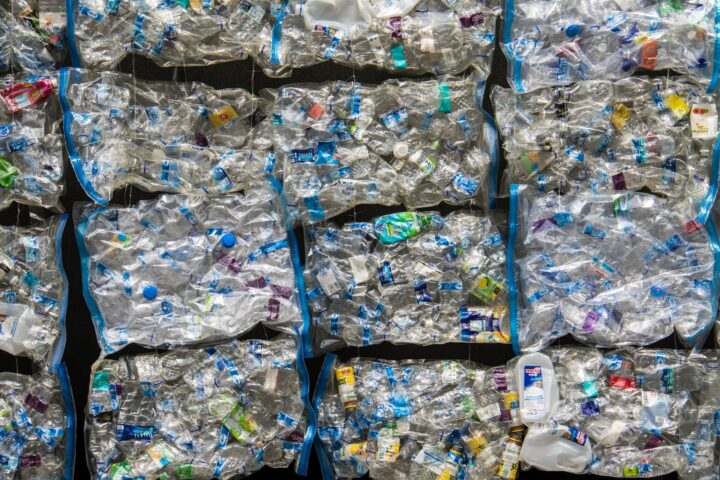
Plastic parts from science kits are a different case. Some councils will take them through kerbside recycling, others will not, and some will want them separated from paper and cardboard. The same applies to book covers, bindings and mixed materials. Local rules are not uniform, so one glance at your council’s waste page can save a wasted trip to the tip.
If you are left with a large amount of mixed material and do not want to make several runs yourself, use a licensed waste carrier. That matters. A private clearance service should be properly licensed, otherwise you are trusting your waste to someone who may dump it where they please.
Choose the right route for each pile
Paperwork, worksheets and many textbooks can usually go into kerbside recycling. Larger quantities can go to the tip if your weekly collection is full or your bin is already crammed with cardboard. Usable textbooks are sometimes worth donating to a charity, school or education group, especially if they still match a current course.
For anything that is not plain paper, check first. Science kit plastics, mixed materials and chemicals all sit in different bins for a reason. WRAP has useful UK guidance on recycling and waste reduction, and your local authority remains the final word for what it will actually collect.
If you are the sort of person who starts a clear-out and finds a forgotten stack of notebooks, a glued-together robot arm, and a dinosaur skeleton model in the same afternoon, you are not alone. You may even end up flicking through a page on scientific curiosities before you get back to the practical job. That detour is harmless. Just do not let it become an excuse to keep the box.
Stop the clutter returning
Once the cupboards are empty, make the space hard to ruin. Put a single labelled box aside for the best keepsakes, then keep the rest of the shelf free for things you actually use. If you have children, set a regular review point for schoolwork, such as the end of each term, so the backlog never gets too deep.
Digital storage helps too. A photo archive of special projects, certificates and drawings takes less room than a single plastic storage tub. For study notes, scanned copies are easier to keep than bundles of paper that nobody opens again.
The real win here is not nostalgia. It is getting back a cupboard, a loft corner, or a whole shelf that had quietly been colonised by old classwork. Once those boxes are gone, the house feels bigger because, for once, it actually is.